
Tag: upcoming cars India

  • New Cars Launching in India This Week (12-18 October 2026): Dates, Prices, What to Expect

    New Cars Launching in India This Week (12-18 October 2026): Dates, Prices, What to Expect

    New cars launching in India this week is the question our Short answered with seven names, but the real picture for 12 to 18 October 2026 is four launches, one debut and one car that is not coming until later. This guide has the verified dates, status and prices for each car, and it corrects the Short on what is a launch, what is only a reveal and what is not happening this week at all.

    New cars launching in India this week: at a glance

    Car Date Status Price (ex-showroom)
    Volvo EX90 12 October Launched ₹1.26 crore (introductory)
    Toyota Glanza facelift 14 October Launched ₹6.99 to ₹10.98 lakh
    Mahindra XUV 3XO CNG 15 October Debut only Not announced
    Audi Q3 (new generation) 16 October Expected Not announced
    Renault Duster Hybrid 17 October Expected Not announced
    Hyundai Bayon 26 October Not this week Not announced

    The dates and statuses below were checked on 14 October, and several of these cars will have prices by the weekend, so check the manufacturer for the latest.

    Volvo EX90: launched at ₹1.26 crore

    The Volvo EX90, a six-seat electric SUV, launched on 12 October at an introductory ₹1.26 crore, with deliveries from January 2027, according to Autocar India. It has a 106 kWh battery, dual motors making 456hp and 670Nm, a 625 km WLTP range and 350kW fast charging, which takes the battery from 10 to 80 percent in about 22 minutes. It is sold in a single Ultra variant. Its smaller sibling, the ES90 sedan, was also announced for 12 October, but we found no launch report, and listings now show January 2027, so treat it as delayed.

    Toyota Glanza facelift: launched from ₹6.99 lakh

    The facelifted Glanza launched on 14 October at ₹6.99 to ₹10.98 lakh, per Autocar India. It gets a new 1.2-litre three-cylinder petrol making 83hp with a five-speed manual or automatic, and a CNG version making 70hp with a claimed 33.61 to 34.47 km/kg and a new CNG automatic. The CNG costs ₹8.76 to ₹10.23 lakh. Bookings are ₹11,000 and deliveries start in the first week of November.

    Mahindra XUV 3XO CNG: a debut, not a launch

    This is where our Short was loose. The XUV 3XO CNG is being revealed on 15 October, and Autocar India expects the sales launch before the end of the year. Its price has not been announced. For the full picture, read our guide to the XUV 3XO CNG.

    Audi Q3: new generation expected on 16 October

    The all-new Q3 is confirmed for 16 October, with bookings open since early September for ₹1 lakh and local assembly started on 25 September, per Autocar India. It uses a 2.0-litre turbo-petrol with a seven-speed automatic and quattro all-wheel drive, expected to make about 204hp, though Audi has not confirmed the power. The price is not announced; Autocar estimates ₹55 to ₹60 lakh, while another outlet estimates ₹50 to ₹54 lakh. The outgoing Q3 costs ₹43.67 to ₹53 lakh.

    Renault Duster Hybrid: expected on 17 October

    Renault’s first hybrid in India opens bookings at ₹21,000 and is revealed on 17 October. It claims 29 km/l and makes 160 PS, but has no announced price. Read the full breakdown in our Duster Hybrid guide.

    Hyundai Bayon: not this week

    The Hyundai Bayon, a new SUV about 4.2 metres long that sits between the Venue and the Creta, has had its India-spec version revealed this week, but its launch is on 26 October, with bookings open at ₹11,000. It has a 1.5-litre petrol making about 115PS with a manual or automatic, and dual 12.3-inch screens, per MotorBeam. Price estimates run from about ₹9 lakh to ₹14 lakh depending on the source, so wait for Hyundai.

    A note on our Short

    The Short said “7 new cars launching this week”. The corrected picture:

    • Seven is too many: four launches are in play this week, the EX90, Glanza, Q3 and Duster Hybrid, plus the XUV 3XO CNG debut. The Bayon launches on 26 October and the ES90 appears delayed.
    • “3XO CNG launching” is wrong: it is a debut on 15 October.
    • “New cars” overstates it: only the Q3 and EX90 are new models. The Duster Hybrid and 3XO CNG are new versions of existing cars, and the Glanza is a facelift.
    • Prices: none is confirmed yet for the Q3, Duster Hybrid, XUV 3XO CNG or Bayon.

    How to read a car launch date

    Three words in a launch headline mean different things. A reveal or debut shows the car and often its features, but not its price or when you can buy it. A launch announces prices and opens or confirms bookings. Deliveries are the actual handovers, which can follow weeks or months later, as with the EX90, whose deliveries start in January 2027. When a Short or headline says a car is “launching”, check which of the three it means before you plan a purchase around it.

    What the dates tell you about prices

    Prices usually arrive on launch day, not at the reveal, so the cars with the latest dates are the ones you cannot price yet. That is why the Audi Q3 and Duster Hybrid are the two to watch this weekend: by 17 October you will know their prices and can compare them with the Grand Vitara, the outgoing Q3 and each other. The XUV 3XO CNG will take longer, because its debut is not its launch.

    Which of these should you wait for?

    If you want a family hatchback with CNG, the Glanza facelift is on sale now. If you want a hybrid or CNG SUV, wait until the Duster Hybrid reveal on 17 October and the XUV 3XO CNG on 15 October before booking either. A luxury buyer comparing the Q3 will want the price on 16 October. None of these cars has been driven by us, and every figure here comes from manufacturer releases and published reports.

    More in upcoming cars, and every Short in the Shorts feed.

    New cars launching this week FAQs

    Which cars launch in India this week?

    The Volvo EX90 launched on 12 October and the Toyota Glanza facelift on 14 October. The Audi Q3 is expected on 16 October and the Renault Duster Hybrid on 17 October, and the Mahindra XUV 3XO CNG is revealed on 15 October.

    Is the XUV 3XO CNG launching this week?

    It debuts on 15 October, but the sales launch and price are expected later in the year.

    When does the Hyundai Bayon launch?

    The Bayon launches on 26 October, not this week. Bookings are open at ₹11,000.

    What is the Toyota Glanza facelift price?

    It costs ₹6.99 to ₹10.98 lakh ex-showroom. The CNG versions cost ₹8.76 to ₹10.23 lakh.

    How much is the new Audi Q3?

    The price has not been announced. Estimates run from ₹50 lakh to ₹60 lakh depending on the outlet.

    This week brings four launches, a debut and a long list of prices still to come. Check back as each car is announced.

  • Renault Duster Hybrid: 29 km/l Claim, 160 PS, Launch Date and Is It Better Than Grand Vitara?

    Renault Duster Hybrid: 29 km/l Claim, 160 PS, Launch Date and Is It Better Than Grand Vitara?

    The Renault Duster Hybrid is the car our latest Short put against the Maruti Grand Vitara, with a claimed 29 km/l and 160 PS. Both numbers are real, and they come from Renault itself. What the Short got wrong is the timing: the Duster Hybrid has not launched yet. Bookings are open, the reveal is on 17 October 2026, and the price has not been announced. Here is everything that is confirmed, how it compares with the strong-hybrid rivals, and what you should check before you book.

    Renault Duster Hybrid at a glance

    • Status: bookings opened on 9 October 2026 with a ₹21,000 token. The reveal and market debut is on 17 October.
    • Powertrain: 1.8-litre naturally aspirated petrol with two electric motors and a 1.4 kWh self-charging battery. There is no plug.
    • Output: 160 PS and 172 Nm, combined.
    • Efficiency: 29 km/l, ARAI-certified and claimed by Renault.
    • Price: not announced.

    What is under the bonnet

    Per Autocar India’s report on the bookings, the hybrid pairs a 1.8-litre four-cylinder petrol engine with two motors: a 20hp starter-generator and a 49hp traction motor that drives the front wheels. A multi-mode automatic with fixed gear ratios sends power to the wheels. Renault says up to 80 percent of city driving can be done in electric mode.

    The 160 PS figure is the combined output of the whole system, not the petrol engine alone. It is also easy to confuse with the Duster’s petrol option called Turbo TCe 160, which is a separate 1.3-litre turbo engine making 163 PS. The names sit close together, but they are different cars.

    Is 29 km/l believable?

    It is an ARAI-certified figure, announced by Renault India on 9 October. ARAI numbers come from a standard test, and real-world economy depends on traffic, speed, temperature and how you drive. Treat 29 km/l as the best-case claim you can compare across cars, not as what you will see on the dashboard in Bengaluru traffic. Still, on paper it is the highest figure in this class.

    Renault Duster Hybrid vs Grand Vitara, Hyryder and Victoris

    The strong-hybrid midsize SUVs it is aimed at all use a 1.5-litre three-cylinder engine with an electric motor and an e-CVT. According to Autocar India’s mileage comparison:

    Renault Duster Hybrid Maruti Grand Vitara / Toyota Hyryder Maruti Victoris
    Engine 1.8-litre petrol, two motors 1.5-litre petrol, one motor 1.5-litre petrol, one motor
    Combined power 160 PS About 116 PS About 116 PS
    Claimed efficiency (ARAI) 29 km/l 27.97 km/l 28.65 km/l
    Starting price Not announced About ₹16.68 lakh (Grand Vitara strong hybrid) See Maruti

    The Duster claims about 1 km/l more than the Grand Vitara and 0.35 km/l more than the Victoris, with roughly 44 PS more combined power than the Grand Vitara. That is a real advantage on paper, but price will decide it, and Renault has not announced one. The Grand Vitara’s strong hybrid starts at about ₹16.68 lakh ex-showroom Delhi at the time of writing, and Autocar India lists its top version at about ₹19.6 lakh, so check the dealer before you compare.

    What the Duster already offers

    The new-generation Duster launched on 17 March 2026 with turbo-petrol engines from ₹10.49 lakh. Its confirmed features include a 10.1-inch touchscreen, a panoramic sunroof, ventilated front seats, a 360-degree camera and 17 driver-assistance features on the top trim, plus a 518-litre boot and 212 mm of ground clearance. It earned a five-star Bharat NCAP rating, scoring 30.49 out of 32 for adult occupants. Renault has not published the hybrid’s own feature list yet, and we could not confirm that the hybrid version was part of that crash test, so wait for the launch details before assuming it matches.

    Who the Duster Hybrid is for

    A strong hybrid earns its extra cost in stop-start city driving, where the electric motors do most of the work and the engine often switches off. If most of your kilometres are on open highways, the benefit is smaller, and a simpler turbo-petrol Duster may suit you better. If you cover a lot of city distance every month, the claimed efficiency gap over a plain petrol SUV is where the hybrid pays you back, so estimate your monthly kilometres and fuel price before you compare the sticker price with the Grand Vitara or Victoris.

    It is also worth asking about service and battery cover. Renault offers a seven-year warranty on the standard Duster that depends on scheduled servicing, and the hybrid-specific terms have not been published, so ask the dealer to put battery and hybrid-system coverage in writing before you pay a token.

    A note on our Short

    The Short said the Duster Hybrid “delivers” 29 km/l and 160 PS. Both figures are officially claimed, so they are right as claims. “Delivers” overstates it, because the car is not on sale yet and nobody has taken delivery. Renault’s March release said hybrid deliveries would come around Diwali, and that the planned 2026 hybrid capacity was already fully allocated, which suggests supply may be tight.

    Should you book the Duster Hybrid now?

    Book if you want a strong hybrid and are happy to commit before the price is known. The token is ₹21,000, and the 29 km/l claim and 160 PS are real selling points.

    Wait for 17 October if price matters, and it usually does. The hybrid’s variants, features and price all arrive at the reveal, and a rival with a known price may look better. Check whether your booking token is refundable before you pay.

    We have not driven the Duster Hybrid. This page uses Renault’s announcements and published reports, and we will update it after the reveal. For more, see upcoming cars, watch the Short in our Shorts feed, and read the full list of cars launching this week.

    Renault Duster Hybrid FAQs

    When does the Renault Duster Hybrid launch in India?

    Bookings opened on 9 October 2026 and the official reveal and market debut is on 17 October 2026.

    What is the Renault Duster Hybrid mileage?

    Renault claims an ARAI-certified 29 km/l. That is a test figure, and real-world economy will be lower and varies with how and where you drive.

    How much power does the Duster Hybrid make?

    160 PS and 172 Nm combined, from a 1.8-litre petrol engine and two electric motors.

    What is the Duster Hybrid price?

    The price has not been announced. It will be revealed at the launch on 17 October.

    Can the Duster Hybrid be plugged in?

    No. Its 1.4 kWh battery is self-charging, so it is a strong hybrid, not a plug-in.

    The Duster Hybrid’s 29 km/l and 160 PS are officially claimed, but the car has not launched and has no price. Wait for 17 October unless you are sure you want to book now.

  • Mahindra XUV 3XO CNG: Launch Date, Expected Price and What We Know So Far

    Mahindra XUV 3XO CNG: Launch Date, Expected Price and What We Know So Far

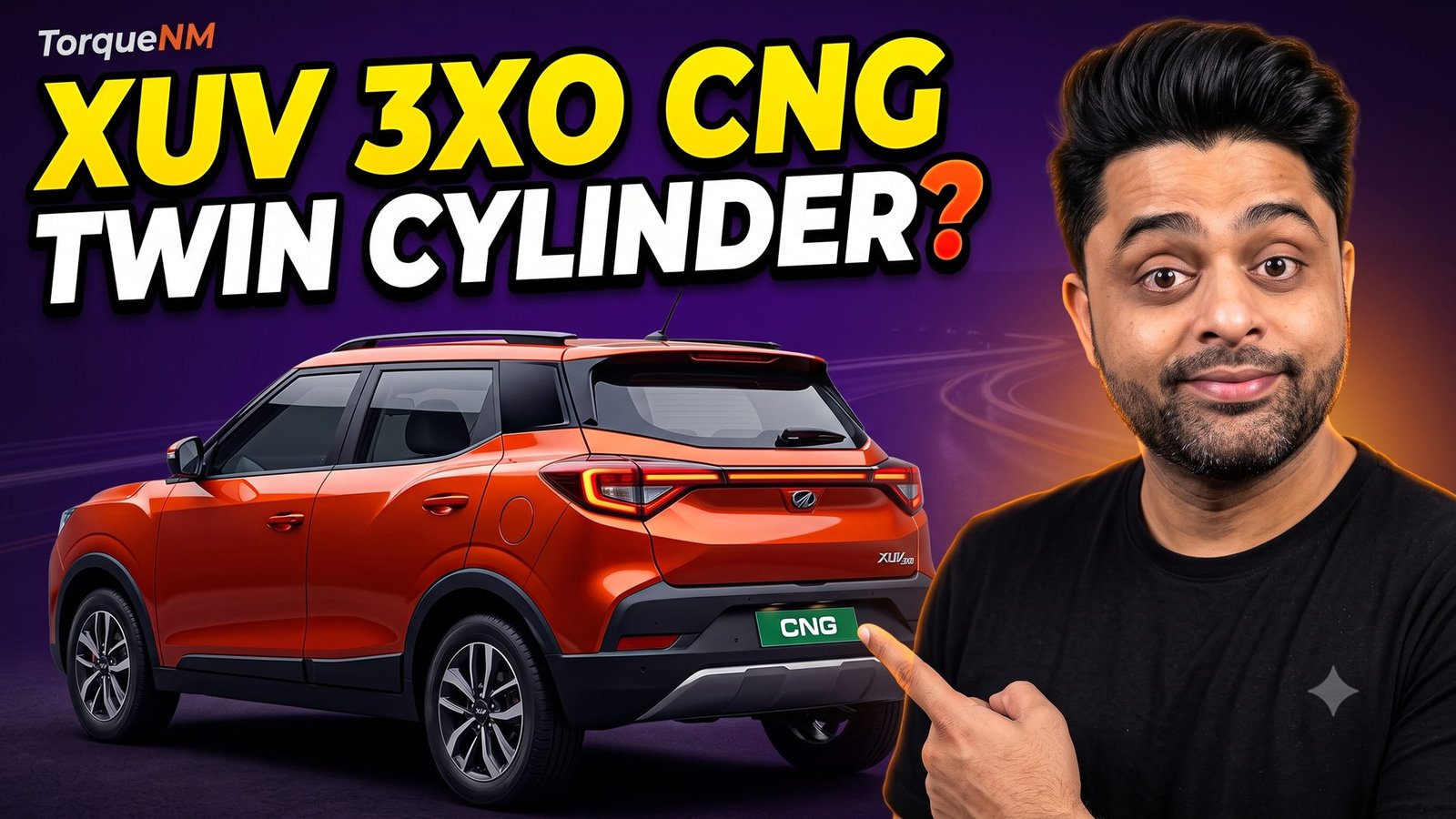
    The Mahindra XUV 3XO CNG is set to be revealed on 15 October 2026, and our latest Short asked the question every compact SUV buyer is now asking: does a factory-fitted CNG finally give the XUV 3XO a running-cost answer to the Tata Nexon and the Maruti Brezza? Mahindra has so far released only a teaser. This guide separates what is confirmed from what is leaked and what is simply expected, so you know what to believe before the reveal.

    Quick facts: what is confirmed and what is not

    • Reveal date: 15 October 2026, confirmed by Mahindra’s teaser.
    • Sales launch: not announced. Autocar India calls 15 October a debut and expects the launch before the end of the year, with prices to follow.
    • Engine: expected to be the 1.2-litre MPFI turbo-petrol, which makes 111hp and 200Nm on petrol. CNG-mode output is not disclosed.
    • Tank layout: leaked images suggest two cylinders. Mahindra has not confirmed it.
    • Price: not announced. Expectations are about ₹50,000 to ₹1 lakh over the equivalent petrol variant.
    • Factory-fitted: yes, according to all coverage.

    What the teaser actually shows

    Mahindra’s teaser, covered by Autocar India on 12 October, shows a panoramic sunroof, the newer front end with a body-coloured panel between the headlamps and a closed grille, and a CNG sticker on the rear glass. That is all it officially confirms beyond the date. It is the fourth powertrain for the XUV 3XO, after petrol, diesel and electric, and it makes the 3XO the third compact SUV with a CNG option, after the Brezza and the Nexon.

    Twin cylinders: leaked, not confirmed

    Our Short said the 3XO gets a twin-cylinder CNG setup. That is the most widely repeated claim, but it is not yet an official one. CarWale’s report from 13 October says leaked images and videos show a dual-cylinder layout and that the cylinders cut into boot space while leaving some usable room. Autocar India still describes the tank type and placement as unconfirmed, and no source has published a capacity. Treat twin cylinders as likely, not settled.

    It matters because the layout decides how much boot you keep. The XUV 3XO already has one of the smaller boots in its segment, so a CNG version is the one to check in person before you book.

    Engine and gearbox: what to expect

    The expected engine is the 1.2-litre MPFI turbo-petrol, not the more powerful TGDi unit. Every outlet expects CNG-mode power to be lower than the 111hp petrol figure, as it is on every CNG car, but nobody has a number. The leaked car in CarWale’s report appears to be manual only, while Autocar India says the CNG gearbox has not been revealed. The petrol 3XO is sold with a six-speed manual and an automatic, so an automatic CNG is not impossible, but do not count on it.

    XUV 3XO CNG vs Nexon iCNG vs Brezza CNG

    The two cars it has to beat are already on sale, so their numbers are the benchmark. Figures below are the claimed ones at the time of writing; prices change, so check the dealer.

    Mahindra XUV 3XO CNG Tata Nexon iCNG Maruti Brezza CNG
    Engine 1.2 turbo-petrol (expected) 1.2 turbo-petrol 1.5 naturally aspirated
    CNG power / torque Not disclosed 100hp / 170Nm 87hp / 121.5Nm
    Tank Twin cylinders (leaked) Twin cylinders under the boot floor Single underbody tank
    Gearbox Not revealed 6-speed manual 6-speed manual
    Claimed efficiency Not disclosed 24 km/kg (ARAI, per Autocar India) 26.9 km/kg
    Starting price (ex-showroom) Not announced About ₹8.35 lakh About ₹9.40 lakh

    One correction to the way the comparison is often framed: the Brezza CNG is not a turbo and does not use a twin-tank layout. The Nexon is the only turbo CNG rival today, which makes it the car the 3XO is really aiming at. The Nexon efficiency figure comes from Autocar India’s review; one price site lists a lower number, so confirm it before you rely on it.

    What will the XUV 3XO CNG cost?

    There is no price yet. Autocar India expects roughly ₹1 lakh over the equivalent petrol variant and CarDekho expects ₹50,000 to ₹1 lakh more. For context, the current XUV 3XO range runs from ₹7.79 lakh to ₹15.04 lakh ex-showroom. A CNG kit usually adds that much, and it pays back through running costs only if you drive enough kilometres, so work out your own monthly distance before you decide.

    A note on our Short

    The Short called the car “Turbo CNG” and said it was debuting on 15 October. The date is right. “Debuting” is the correct word, because the sales launch comes later. “Turbo CNG” is not a name Mahindra has used; the engine is expected to be a turbo-petrol, but that is an expectation. And the twin-cylinder layout is leaked, not confirmed.

    Should you wait for the XUV 3XO CNG?

    Wait if you were already looking at the Nexon or Brezza CNG and can hold off a few weeks. The reveal on 15 October should settle power, tank layout and boot space, and the launch price will follow later this year.

    Do not wait if you need a car now. A CNG SUV is a long-term running-cost purchase, and the Nexon iCNG is on sale today with confirmed numbers. If boot space matters to you, test any CNG car with your luggage before you pay.

    We have not driven the XUV 3XO CNG, and nobody outside Mahindra has. Everything here comes from Mahindra’s teaser, leaked images and published reports, and we will update the page after the reveal. See more in upcoming cars, or watch every Short in our Shorts feed. For this week’s other debuts, read new cars launching in India this week.

    Mahindra XUV 3XO CNG FAQs

    When is the Mahindra XUV 3XO CNG launching?

    It is being revealed on 15 October 2026. Autocar India expects the sales launch before the end of the year, with prices announced in the weeks after the reveal.

    Will the XUV 3XO CNG have twin cylinders?

    Leaked images suggest two cylinders, but Mahindra has not confirmed it and no capacity has been published.

    What engine will the XUV 3XO CNG use?

    It is expected to use the 1.2-litre MPFI turbo-petrol, which makes 111hp on petrol. Its CNG-mode power has not been disclosed.

    How much will the XUV 3XO CNG cost?

    The price has not been announced. Reports expect about ₹50,000 to ₹1 lakh over the equivalent petrol variant.

    Is the XUV 3XO CNG factory-fitted?

    Yes, all coverage describes it as a factory-fitted CNG, not a dealer-fitted kit.

    The XUV 3XO CNG looks like a serious answer to the Nexon, but the numbers that matter most, power, tank layout, boot space and price, are still to come. Check back after the 15 October reveal.